At Set Back in Time, we are very familiar with the effects of magnetism. Vintage watches and electronic devices simply don’t mix very well. A vintage watch is a finely tuned machine, largely made of metal and built for precision. However, if the delicate components are exposed to magnetism, accuracy will suffer. This is something that many vintage watch owners know only too well. Watches which were made decades ago, before the introduction of non-magnetic materials, are highly sensitive to magnetism. In this post, we explore how magnetism can affect a vintage watch, how to spot the signs, and what you can do to fix and prevent it.

Why magnetism matters for your watch
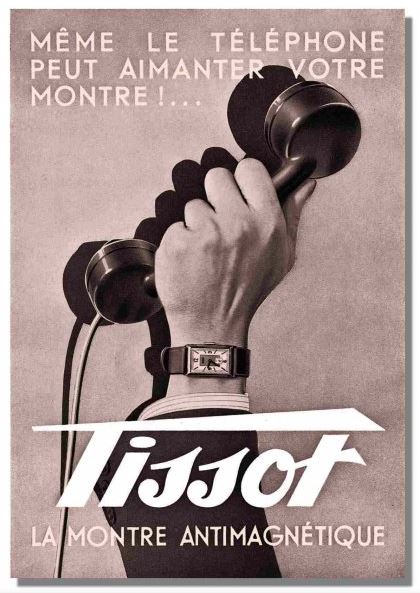
Magnets are everywhere in modern life, and often in places we wouldn’t expect. Mobile phones, wireless headphones, laptops, televisions, and even handbags with magnetic clasps all contain magnets. While these electronic devices are very useful, the magnetic fields that they generate can disrupt the delicate inner workings of a vintage mechanical watch.
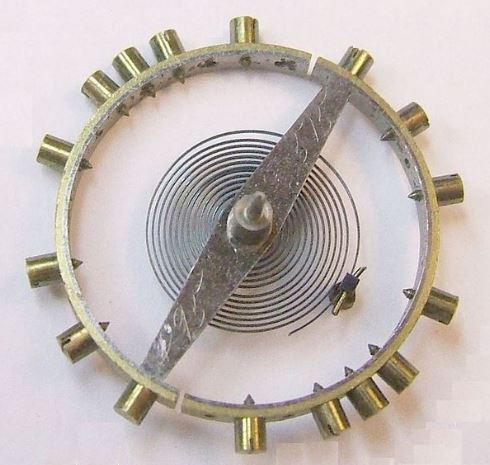
Mechanical watches rely on finely balanced components to keep time accurately. The balance spring, escapement wheel, and pallet fork work together to regulate the watch’s movement. These parts are often made from ferromagnetic metals such as iron, nickel, and cobalt, which can become magnetised when exposed to an external magnetic field. When this happens, your watch may start running fast, slow, or erratically. In extreme cases, it might stop working altogether (The impact of magnetism on watches at WaHaWatches).
Signs your watch may be magnetised
If your watch isn’t keeping time as it should, magnetism could be the culprit. Here is how to check:
1. Inaccurate timekeeping
The coils in a magnetised balance spring can stick together, reducing the range of motion, causing it to move more rapidly. This causes the most common symptom of a magnetised watch, where it suddenly sees a significant gain in time, sometimes minutes per day.
2. Erratic hand movements
If the second hand moves irregularly, skips, or stops, the escapement may be affected. The escape wheel and pallet fork can stick together due to magnetism, disrupting the watch’s rhythm.
3. The compass test
For a reliable old-school method, place a compass on a flat surface and slowly bring your watch near it. If the compass needle moves unexpectedly, your watch is likely magnetised.
Can your smartphone magnetise your watch?
Yes, it can. Many smartphones contain magnets for wireless charging, speakers, and cases with magnetic closures. While they might not always be strong enough to affect a watch instantly, prolonged exposure, such as storing your watch next to your phone, can cause issues over time. If you are right-handed, consider wearing your watch on your left wrist, and carry your smartphone in the right pocket of your jeans or trousers. If you carry it in your left pocket, the watch would be in regular contact, exposing it to magnetism.
How to demagnetise your vintage watch
Having a magnetised vintage watch can be one of the most frustrating parts of collecting vintage watches. It doesn’t matter how careful you are. The occasional exposure to an electronic device can cause your vintage watch to become magnetised. If your watch has become magnetised, there is no need to worry, you have a few options:

1. Let it rest on a non-magnetic surface
Some collectors believe that leaving a magnetised watch on a wooden or plastic surface for a few hours can help it lose magnetism naturally. However, this method is unreliable and may not fully restore accuracy. This is not something that Set Back in Time would recommend, it really is only as a last resort.
2. Use a de-magnetiser
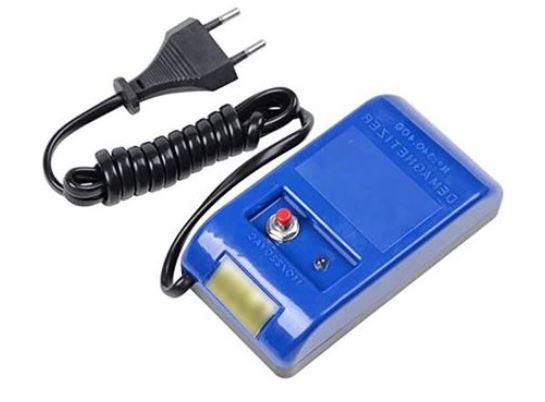
A watch Demagnetiser (Degausser) is a small device that removes magnetism in seconds. These can be purchased online, but unless you frequently deal with magnetised watches, it may not be worth the investment. To demagnetise a vintage watch, first make sure the watch you’re about to demagnetise is not currently running. If the movement features a hacking seconds function, pull out the crown so that the seconds hand stops. If it doesn’t have this functionality, you’ll have to let the power reserve run down naturally before demagnetising. Next, place the watch (or movement) near or on the degausser, hold the activation button, and slowly lift the watch straight up and away from the device by at least 30 cm (12 inches), then release the button. This process should only take 5 seconds. Repeat the process 3 or 4 times. Then retry the compass test to confirm the process has worked.
3. Visit a professional watchmaker
The safest and most effective demagnetisation option is to take your watch to a professional. A watchmaker will have specialised tools to demagnetise your watch and check for any lasting damage, such as a distorted balance spring. If needed, they can also make adjustments to restore accuracy (How to demagnetise a vintage watch at Hodinkee).
Preventing magnetisation in a mechanical watch
It is almost impossible to avoid magnetism in the modern world. However, to keep your watch running smoothly, take a few simple precautions:
Keep your watch away from strong magnetic fields
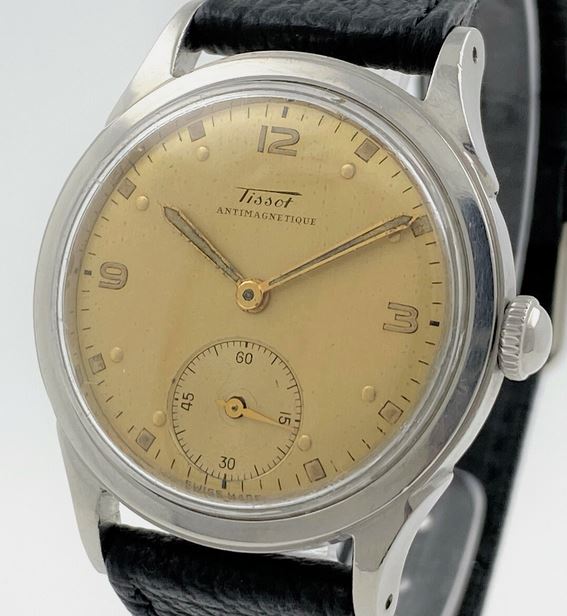
Avoid placing your watch near the powerful magnets found in televisions, speakers, microwaves and laptops. Even placing your watch next to an alarm clock overnight can cause issues. If you work in an environment with strong magnetic fields, such as near industrial machinery or MRI scanners, consider removing your watch before starting work or wear an anti-magnetic model.
Store your watch safely
When not wearing your watch, store it in a watch box or case away from electronics. Keeping some distance between your watch and everyday devices can significantly reduce the risk of magnetisation.
Regular servicing
Checking for magnetism is a normal part of a routine service for a mechanical watch. The watchmaker can identify the signs of magnetisation and have it removed before it seriously affects the watch’s timekeeping. This is particularly important for vintage watches, as their older components are often more vulnerable to wear and the effects of inaccurate timekeeping caused by prolonged magnetisation. This is another reason why it is recommended to schedule regular servicing for vintage watches. Generally, every five years is a reasonable timeframe. Obviously, if your watch is showing the symptoms of magnetism, servicing should probably be brought forward.
Conclusion
Magnetism is one of the less obvious threats to a mechanical watch. However, it’s an invisible force, and it surrounds us in the modern world. It is really hard to avoid, as virtually every electronic device is constantly emitting magnetic fields. However, it is usually fairly easy to deal with. Limiting unnecessary direct contact with electrical devices is an obvious starting point. Recognising the signs of magnetisation and addressing the issue quickly helps maintain accurate timekeeping and prevent permanent damage. A simple, low-cost degausser is the easiest option for resolving magnetism issues. And if in any doubt, a visit to a professional watchmaker can always set things right.
Related content
Magnetism at Wikipedia.
Leave a Reply