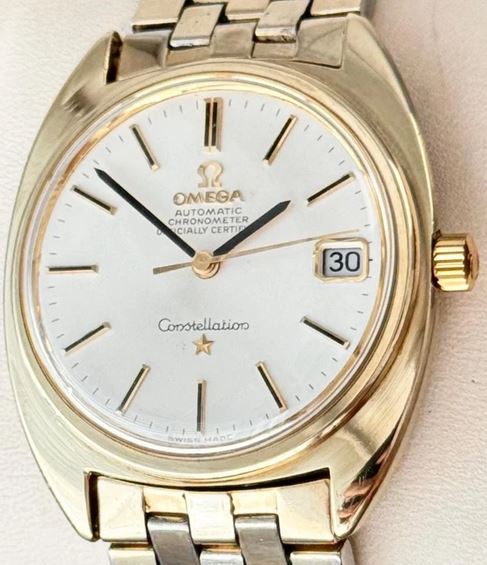
This is a new edition to the expanding collection at Set Back in Time. One of our founding members acquired this Omega Constellation automatic dating from 1968. The watch has an automatic Omega calibre 564, adjusted in five positions and temperature. The movement is fully signed and the Omega serial number 26384804 dates it back to 1968. The gold-capped Omega Constellation C-Case is in remarkable condition. This watch was purchased from the Authentic Watch Company, specialists in vintage Omega watches. We couldn’t resist researching the watch, below is what we have uncovered.
A brief history of the Omega Constellation
The Constellation line was created specifically as Omega’s flagship chronometer collection, representing the brand’s commitment to precision and excellence. Every Constellation model, whether vintage or modern, has been officially certified for its chronometer-level accuracy. According to Mikrolisk, Omega registered the trademark “Constellation” in May 1952. Omega launched the first Constellation watches with automatic movements and adjusted them to chronometer standards. Initially, Omega fitted them with “bumper” automatic movements (351, 352, 354). Bumper rotors swung back and forth instead of turning a full circle, hence the name “bumper”. These early models often featured solid gold or gold-capped cases and bracelets.
Omega calibre 564
The calibre 564 represents one of Omega’s finest achievements in mechanical watchmaking, hailing from the golden era of the 500-series movements. It was in production from 1966 to 1969. As a high-grade chronometer movement, it features 24 jewels, a power reserve of 50 hours, Incabloc shock protection and a frequency of 19,800 vph. Omega specifically designed this movement for the Constellation line, ensuring it met the strict requirements for official chronometer certification (Omega 564 at Ranfft DB).
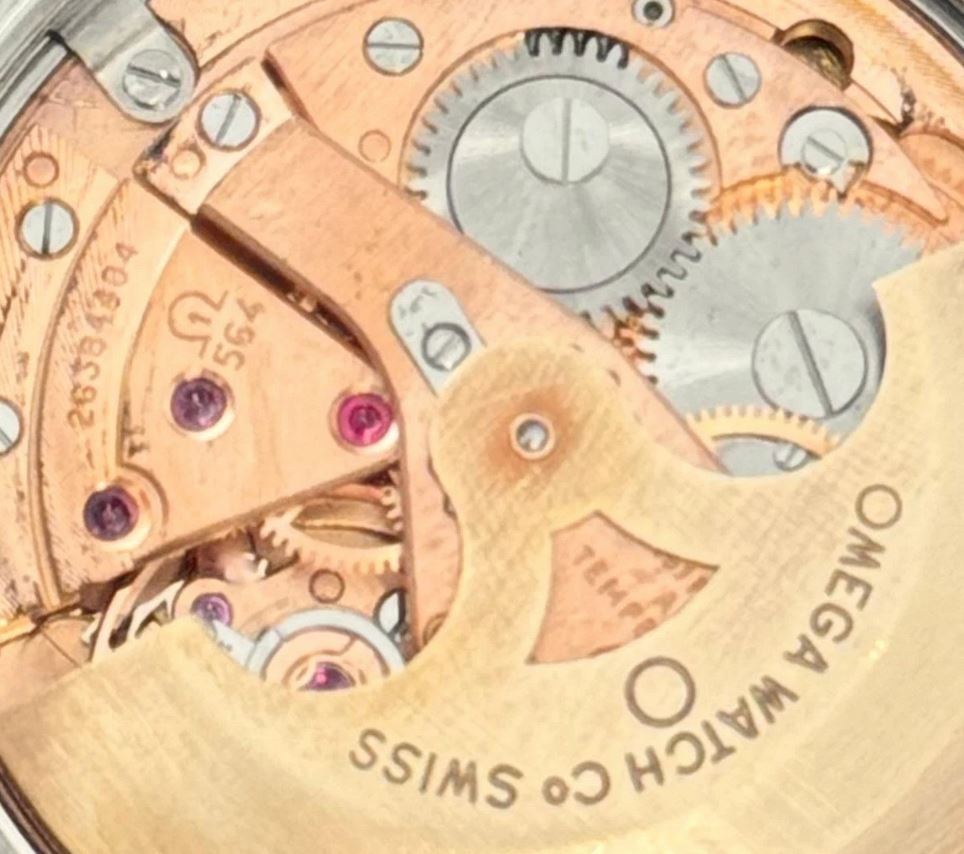
One of the standout features of the calibre 564 is its sophisticated quickset date function. Unlike earlier models that required the wearer to rotate the hands repeatedly, this movement allows for rapid date changes. By pulling the crown out to the furthest position, the date is quickly set by repeated pulling and pushing of the crown. The movement also includes a swan-neck regulator, which allows watchmakers to perform incredibly fine adjustments to the timing.
Chronometer Certification
As stated on the dial, this Omega Constellation is a certified chronometer, which means it operates to high timekeeping standards. The Contrôle Officiel Suisse des Chronomètres (COSC) centralises the Swiss testing laboratories that have certified high-precision timepieces since the 19th century. Although COSC was incorporated in its current form in 1973, it modernised a long-standing tradition of “observatory trials” and regional testing offices. These early institutions laid the groundwork for the standards that define the Swiss industry today.
For 1960s mechanical movements, testers applied standards that preceded the modern ISO 3159 framework. However, remained remarkably strict. Technicians evaluated these movements over fifteen days across five positions and various temperatures to ensure consistent timekeeping. While modern COSC limits allow for -4/+6 seconds of daily deviation, pre-1973 regional certificates often required a mean daily rate between -1 and +10 seconds. At Set Back in Time, we are quite pleased to say that this Omega Constellation is running at +5 seconds a day, well within the modern ISO 3159 standard.
Case and dial
The Omega Constellation C-Case measures 35mm in width, excluding the winding crown, and 32.5mm in height, excluding the lugs. The watch features a gold-capped finish, where the maker applies a substantial layer of 14k gold to the front and sides of the case. This capping process provides such structural integrity that the gold shell can actually hold its shape independently of the steel case. Apparently, Omega salesmen carried samples of the gold capping alone to demonstrate its remarkable strength to prospective buyers.
The striking original silver dial carries the signature “Omega Automatic Chronometer Officially Certified Constellation Swiss Made”. Clear, raised black and gold baton markers embellish the dial surface, while black hour hands and a gold seconds hand track the time against the outer minute markers. A gold-outlined date window sits at the 3 o’clock position, completing the sophisticated aesthetic of this vintage chronometer. The original Omega winding crown is a nice touch of authenticity.
Observatory emblem
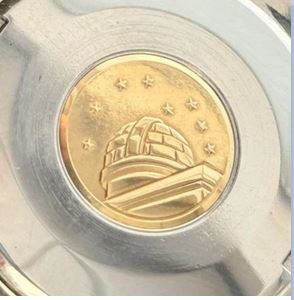
The case back showcases the iconic Geneva Observatory logo in gold. The eight stars engraved above the observatory represent Omega’s significant horological milestones. Specifically, these represent two world records for precision set in 1933 and 1936, along with six “wristwatch-sized” contest victories achieved between 1945 and 1952. The case remains in good condition, showing only light surface marks that most collectors would consider desirable patina.
Gold filled vs plated vs capped
This Omega Constellation features a 14k gold-capped case. This is in remarkable condition given that the watch is nearly 60 years old. The primary differences between gold-capped, gold-filled, and gold-plated watches lie in the thickness of the gold layer and its overall durability. Manufacturers use these various methods to apply gold to a base metal, creating watch cases that range from budget-friendly options to high-end vintage pieces that mimic the look of solid gold.
Gold-capped watches feature the thickest application, sometimes reaching up to 240 microns. In this process, the maker presses a heavy, solid gold shell over a steel case. This method provides exceptional durability and an appearance identical to solid gold. The thick layer also ensures the watch maintains its finish even after decades of use. Gold-filled watches offer a robust middle ground for daily wear, containing between 5% and 10% gold by weight. To create this finish, craftsmen use heat and pressure to mechanically bond a thick layer of gold to a base metal, typically brass or stainless steel. This substantial layer resists wear and tear effectively, often lasting for several decades without exposing the base metal underneath.
In contrast, gold-plated watches represent the most affordable but least durable category. This process involves electroplating a very thin layer of gold, usually less than 5 microns, onto a base metal. Because the coating is so fine, it tends to wear off quickly. This is especially the case at high-contact points such as the lugs and edges. On this watch, the case is gold-capped, and the original bracelet is gold-plated. The case would be classified as in excellent condition. The bracelet, which shows slight wear, is in very good condition.
Omega Constellation C-Case
The Omega Constellation C-Case debuted in 1964, representing a bold shift in the brand’s design philosophy. This iconic silhouette features sleek, integrated lugs that merge seamlessly with the body of the watch. The collection draws its name from the case’s unique geometry, which evokes the image of two “C” shapes facing one another. By introducing clean lines and the integrated architecture, Omega set a new benchmark for luxury sports watches of the era.
The legendary watch designer Gérald Genta crafted this modern evolution of the Constellation line. Genta, famous for his innovative approach to horology, deliberately moved away from traditional case shapes to create this contemporary look. Apparently, he chose the “C” shape as a clever nod to the collection’s history, representing the third major iteration of the Constellation line, as “C” is the third letter of the alphabet.
This design era, which spanned from 1964 to 1978, stood in contrast to the Art Deco appearance of the earlier “Pie-Pan” models. The C-Case versions prioritised a much cleaner dial appearance, favouring minimalist elements such as slim baton hands and jet markers. This shift not only modernised the Constellation but also cemented Genta’s reputation for defining the future of luxury watch design (The C-Shape Era at Goldammer).
The Authentic Watch Company
The Authentic Watch Company (AWC) operates as a well-established, family-run business in the South East of England. The team focuses specifically on vintage Omega models, including the Seamaster, Constellation, and De Ville collections. They maintain a network of carefully vetted suppliers who adhere to their strict quality standards. Every vintage timepiece from AWC undergoes a full service and arrives with a twelve-month guarantee alongside an official Certificate of Authenticity.
After discovering several Omega Constellations on the AWC website, an appointment was arranged to visit the owner, Liam, at their office. Liam dedicated an hour to discussing the available pieces and sharing his extensive expertise on the wider vintage watch market. His personable approach and deep knowledge made the experience exceptional. The high-quality packaging, comprehensive documentation, and elegant presentation box elevated the entire purchase. We definitely intend to return to the Authentic Watch Company for future vintage Omegas.
Summary
There was a lot to explore regarding this vintage Omega Constellation automatic. The Set Back in Time team shared the research. There was a lot to cover, the Omega Constellation itself, the 564 calibre, the Chronometer certification, the C-Shaped gold-filled case and the near-mint dial. The research was a team effort, involving a few pints of beer in the local pub. Sadly, only one of us gets to take this vintage Omega Constellation automatic home.
Related content
Omega Master Chronometer Certification at Omega.
Leave a Reply