If you are looking to purchase your first vintage watch, deciding on the right case material might be a bit of a challenge. It won’t be too surprising that steel is the most common material for vintage watches. It is a safe and durable choice, but there are other options. In this Set Back in Time guide, we will explain the most common types of case material available and the pros and cons of each.
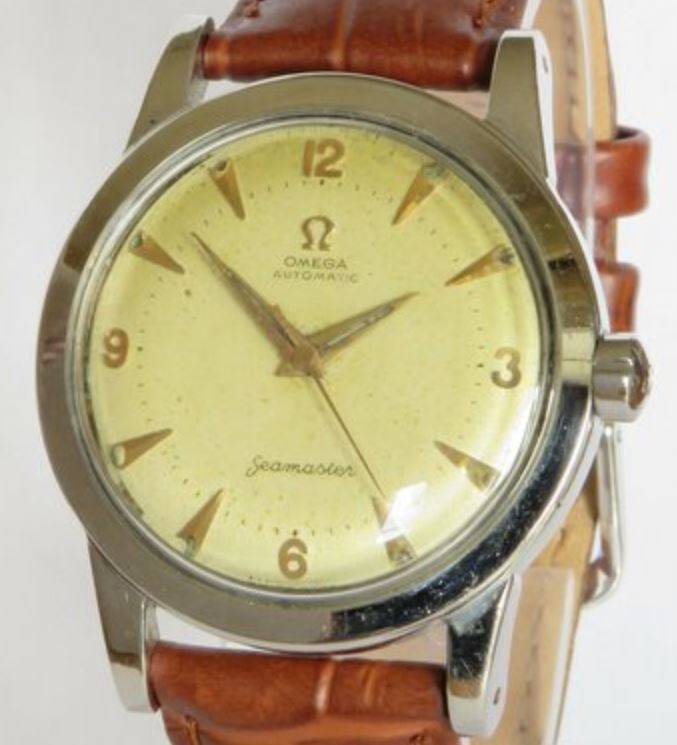
Nickel alloys
Pure nickel (Ni) is a corrosion-resistant metal, which naturally forms a layer of nickel oxide on its surface, which protects against further corrosion. Nickel in its pure form has a silvery-white, lustrous appearance with a slight golden tinge. If a more expensive look was required, the nickel could be alloyed with other elements to give it an appearance more like silver. These nickel alloys closely resemble silver in colour and take a high polish. The silver-like appearance is why they are called nickel silver, even though they contain no actual silver. Nickel silver usually consists of around 60% copper, 20% nickel and 20% zinc. Nickel silver is also known as German silver or French Argentan (Nickel at Wikipedia).
Chrome plating
Colin Fink and Charles Eldridge developed the first commercial process for chrome plating in America in 1924. However, manufacturers only began using chrome plating on watch cases in the late 1920s. Despite its silver-like appearance, chrome plating is generally not the preferred case material. This is due to the difficulty of refinishing plated cases as opposed to stainless steel (or solid gold). Significant dings and scratches in chrome cannot be polished out without the risk of removing the plating and revealing the base metal (brass).
Stainless steel
Stainless steel is a durable, corrosion-resistant material which can last for many years. It is highly resistant to rust, moisture, and sweat. With steel cases, you must carefully check whether someone has polished them. In this context, “polished” does not mean a person cleaned the case with a soft cloth. Instead, it refers to whether a machine-polisher has rounded the edges and caused the case to lose its shape. On most vintage Omega watches, the horns and case should have relatively sharp edges. However, these can become soft and rounded if polished excessively.

Gold plated
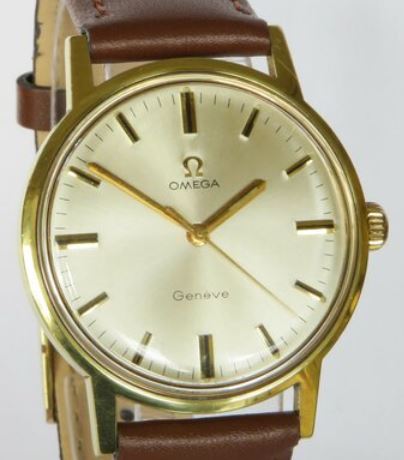
Gold-plated vintage watches consist of a base material with a thin layer of gold applied. Plated cases are where the base metal, typically brass, is covered with a gold layer 2.5 microns thick, which is 0.0025 millimetres. A small amount of wear is inevitable on a vintage watch. The previous owner wore the watch, so most collectors consider bumps and scratches normal wear and tear. However, “brassing”, where the underlying metal is exposed, indicates heavy wear and is not desirable. Some vintage Omega watches have a front case that is gold-plated, while the case back is stainless steel. This means that the part which rubs against the wrist consists of a more durable metal and is less prone to wear.
Gold filled
To the novice collector, a gold-filled vintage watch case might look identical to a gold-plated case. The difference, however, is that gold-plated vintage watches have a very thin outer layer of gold. In contrast, gold-filled watches have a slightly thicker gold coating that covers a base material, such as stainless steel. This capping process provides such structural integrity that the gold shell can actually hold its shape independently of the steel case. Apparently, Omega salesmen carried samples of the gold capping alone just to demonstrate its remarkable strength to prospective buyers. Filled gold will have a gold layer at least one hundred times thicker than gold plating (Rolled Gold and Gold Filled at Gold Traders).

Solid gold
Vintage watches made in solid gold generally consist of both a front and a case back made entirely in gold. However, gold is a very soft material. For this reason, manufacturers typically did not make vintage watches from pure 24ct gold. It is simply too soft for a watch case and would not be able to stand the daily wear and tear of use. Vintage watches are typically made of either 9ct, 14ct or 18ct gold. As a rule of thumb, the higher the carat, the less durable and more expensive it becomes.
Related content
A historic guide to watch case materials at Goldammer.
Leave a Reply