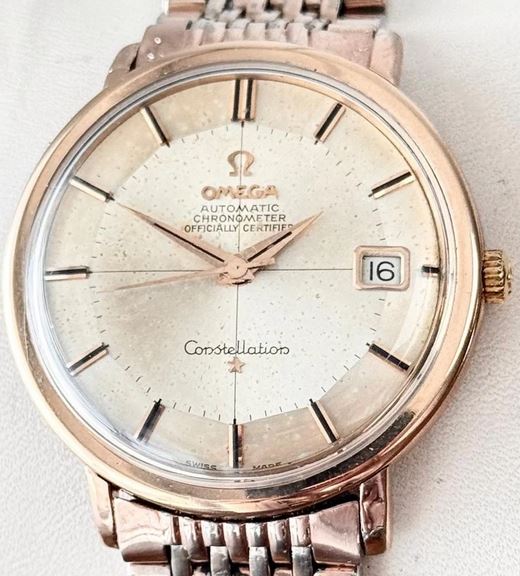
The Omega Constellation is not a watch that regularly dominates the discussions at Set Back in Time meetings. Generally, when Omega comes up, the discussion centres around Seamasters, Speedmasters, and dare we say it, the MoonSwatch. However, in a recent meeting, a newcomer to the group was wearing an Omega Constellation with a Pie Pan dial. Specifically, it was an Omega Constellation Pie-Pan crosshair chronometer-certified automatic. The rose gold-plated case houses the highly reliable 561 automatic movement and comes with a matching rose gold-plated Omega bracelet. This chance meeting was the inspiration for this post.
The Omega Constellation: a brief history
Omega introduced the Constellation in 1952 as its flagship line of precision chronometers. Essentially, it was a successor to the Centenary watch of 1948, which was designed to commemorate Omega’s 100th anniversary. The Constellation name was inspired by the stars and Omega’s precision achievements at observatory trials at the Geneva Observatory. Early models featured the distinctive “Pie Pan” dial, dauphine hands, and the Observatory medallion on the case back. Throughout the decades, the Constellation has evolved in both style and technology while retaining its heritage of accuracy and luxury. Notably, the 1980s introduced the iconic “Manhattan” design, recognisable for its integrated bracelet and signature claws at 3 and 9 o’clock, which became a hallmark of the collection.
Omega 561 calibre
According to the Ranfft DB, the Omega 561 movement was in production between 1958 and 1967, with a total of approximately 5.8 million units manufactured during that time. This automatic chronometer movement features a sweep seconds hand and a date complication. Advancing the time between the 21- and 24-hour positions changes the date. It also includes Incabloc shock protection for enhanced durability. Additionally, it includes 24 jewels, a power reserve of 50 hours, bi-directional automatic winding and a frequency of 19,800 vph.
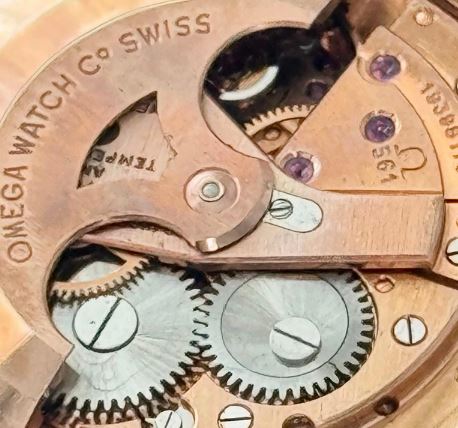
The movement states that it has been adjusted to five positions and for temperature. The Omega serial number dates the movement to 1963. Collectors widely regard the Omega calibre 561, from the brand’s popular 500 series, as one of Omega’s finest and most reliable movements. The 561 movement was actually certified as a chronometer by the Swiss “Bureaux Officiels de Contrôle de la Marche des Montres” (B.O.), the predecessor to COSC.
Dial and case
This Constellation Pie Pan chronometer features an original champagne cross-hair dial. This is embellished with clear raised rose gold/black gold baton markers and hour hands. Additionally, the seconds hand, inner minute markers and the date window at the 3 o’clock position all feature rose gold detail. The dial is signed “Omega Automatic Chronometer Officially Certified Constellation Swiss Made”.
The rose gold-plated case shows some wear and tear from age. However, it remains in good condition by the standards of most collectors. The screw back casing displays the Constellation embossed medallion showing the Geneva Observatory surrounded by 8 stars.
Pie Pan dial
Omega introduced the first Constellations in 1952 as chronometer-grade watches that stood out for their refined design and precision. However, one of the most recognisable features of these early models is the dome-shaped dial. The outer edge of the dial is divided into twelve facets between the hour markers. As a result, this distinctive style earned the nickname “Pie-Pan” among collectors (The Pie-Pan era at Goldammer).
Other hallmark characteristics include the elegant Dauphine-style hands, round cases, automatic movements with central seconds, and faceted crowns. Many models also featured uniquely shaped lugs, often referred to as “dog-leg” lugs. Omega offered the Constellation in three finishing levels: Standard, De Luxe, and Grand Luxe, to reflect varying degrees of luxury and craftsmanship.
Summary
Emerging in 1952, the Omega Constellation swiftly became a highly recognisable and important model in the world of luxury watchmaking. Predating the classic Speedmaster range by five years, the Constellation was Omega’s first mass-produced model to achieve chronometer certification.
The early Constellation watches feature the highly coveted convex “Pie-Pan” dial. These dials feature twelve facets and sloping edges that resemble an inverted pie pan. They remain highly sought after by collectors. However, while the Constellation has continually evolved over the years with innovative improvements, the earlier models remain some of the most desirable vintage watches on the market.
Collecting vintage Omega Constellation watches offers a rewarding experience that goes beyond mere timekeeping. Whether you admire the elegance of the pie-pan dial or value the precision of the chronometer-certified movement, you can hardly go wrong with a vintage Constellation.
Related content
COSC at Wikipedia.
Leave a Reply