A question was asked in one of the Set Back in Time sessions in the local pub. As usual, there was a wrist check, and the watch that gathered the most attention was a 1958 Omega Seamaster. And of course, this led to the question: “How water-resistant are vintage Omega Seamaster watches?” In this post, we will do our best to answer that question.
Vintage Omega Seamasters vary greatly in water resistance, from 30m (splash-proof) for early dress models (1950s – 1960s) to 60m or more for specific tool-watch versions like the Seamaster 300 (1957). However, you should generally treat vintage Seamasters as not water-resistant today, since the original gaskets have degraded. Maintaining water resistance requires professional servicing and pressure testing for any water exposure beyond splashes.
Early dress‑style Seamasters (1940s–1950s)
Omega launched the Seamaster line in 1948 as a sturdy, everyday watch. It used a rubber O‑ring to seal moisture out, giving about 30 metres (3 ATM) resistance. That rating handled splashes, rain or hand‑washing with ease, but it never meant deep submersion. Cases measured roughly 34 mm across, and crowns weren’t yet screw‑down. Inside, movements were robust and easy to service by any watchmaker. According to some sources, in 1955, the Swiss Laboratory for Watch Research successfully tested 50 Seamaster cases to depths of 60 metres. However, water resistance is more than just lowering a watch to a specific depth.
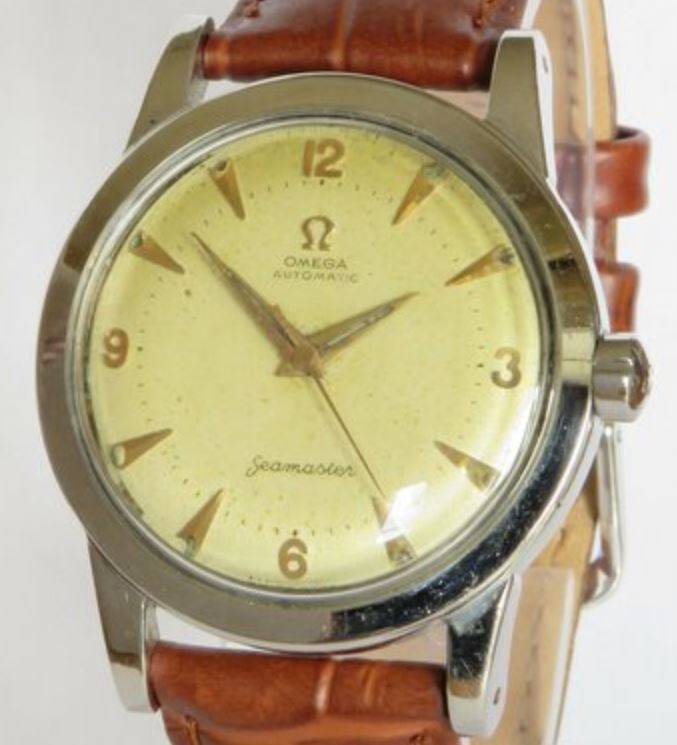
Many owners today use these early Seamasters as daily wristwear rather than poolside companions. They stand up to daily life if you treat them gently. Yet original gaskets have likely dried or shrunk over decades, so don’t assume a 30-metre rating still applies without checking.
The dawn of the dive watch (1957–1960s)
In 1957, Omega introduced the Seamaster 300, its first purpose‑built dive watch. It offered 200 metres (20 ATM) resistance and a rotating bezel for timing. Omega tightened the case design, added a screw‑down crown, and improved gaskets to keep water out at depth. Jacques Cousteau’s team even wore these watches during their Conshelf II habitat trials in 1963, proving their ruggedness under real diving conditions.

Over the 1960s, Omega refined the Seamaster 300 case and dial. They added broad arrow hands, luminous markers, and thicker crystals. That decade marked a shift from simple dress watches to serious underwater tools. Although these models once logged hundreds of dives, their seals now demand fresh service before facing moisture again (Omega Seamaster at Chronopedia).
Further advances (1970s and beyond)
By 1970, Omega teamed with COMEX, a leading French diving firm, to build the PloProf (Seamaster 600) for extreme depths. The PloProf featured a massive monobloc case, locking bezel, and up to 600 metres of water resistance. The design wasn’t for everyone, but it cemented Omega’s dive‑watch credentials.
Later in the 1970s, Omega rolled out the Seamaster Professional line. These models often reached 300 metres (30 ATM) or more. They used thick sapphire crystals, helium‑release valves, and highly robust crowns. Modern servicing keeps these seals functional, but original gaskets from that era will need replacement for safe water use.
Why vintage seals and gaskets matter
Water resistance relies on tiny rubber or polymer seals at the crown, case back, and crystal. Over time, these seals harden, shrink or crack. Even a well‑built dive watch can leak if gaskets fail. A case that once sealed at 200 metres may now let in moisture at 30 metres.

Experts advise annual pressure testing and gasket replacement. Omega itself recommends a dry pressure test yearly. You can watch a technician do this in minutes at the boutique or authorised service centre. If you visit an authorised dealer, they’ll likely offer a wet test too, which confirms no leaks underwater (Are vintage watches waterproof? at WahaWatches).
Testing and servicing a vintage Seamaster
1. Dry pressure test
– Technician places the watch in a chamber and measures case compression under air pressure.
– This method detects seal failures without using water.
2. Wet pressure test
– The watch goes into a water tank with simulated depth.
– Bubbles reveal leaks immediately.
3. Gasket replacement
– Crown tube, case back gasket, crystal gasket and crown seals get replaced with new parts.
– Technicians lightly lubricate new gaskets to improve sealing.
4. Movement service
– Vintage movements often need cleaning, oiling and regulation to run smoothly.
– A full service helps ensure the case seals correctly under pressure.
Aim to have every vintage Seamaster pressure-tested before any water exposure, even shallow splashes.

Every‑day care after water exposure
Saltwater and chlorine attack metal and rubber parts. If your vintage watch does get wet, rinse it gently with fresh water and a soft brush. Wipe it dry with a lint‑free cloth. Avoid high‑pressure jets or ultrasonic cleaners at home, as these can force water behind the crystal (Vintage watches aren’t as fragile as you may think at Fratello).
Practical tips for wearers
Keep it dry unless you test it first.
Avoid steam (showers, saunas) as heat expands seals, and steam can bypass them.
Store watches in a cool, dry place to slow gasket ageing.
Summary
The water-resistance of vintage Omega Seamasters varies widely by model, year and service history. Early dress models handle moisture only if the seals hold. Mid‑century dive watches once reached 200 metres, while the later Professional models hit 300 metres or more. Over time, gaskets degrade and compromise ratings. Pressure tests and regular servicing keep these treasures safe around water.
Related content
Watch water-resistance at Wikipedia.
Leave a Reply