ETA SA Manufacture Horlogère Suisse (ETA SA), a subsidiary of The Swatch Group, occupies a central place in the history of Swiss watchmaking. The company, as it exists today, emerged through centuries of industrial consolidation and economic necessity. Its history reflects the broader experience of the Swiss watch industry, from small Jura workshops in the eighteenth century to modern global manufacturing.
Foundations
The foundations of ETA SA go back to 1793, when a movement workshop was established by Isaac and David Benguerel, along with Julien and François Humbert-Droz, in Fontainemelon, Switzerland. Initially, they traded under the name “Benguerel & Humbert”. This enterprise eventually became the Fabrique d’Horlogerie de Fontainemelon (FHF). At the time, Swiss watchmaking operated under a system known as établissage. Different specialists produced gears, springs, escapements, and unfinished movements, which were then assembled by watchmakers into complete watches. FHF became one of the major producers of these unfinished movements, known in French as “ébauches”.
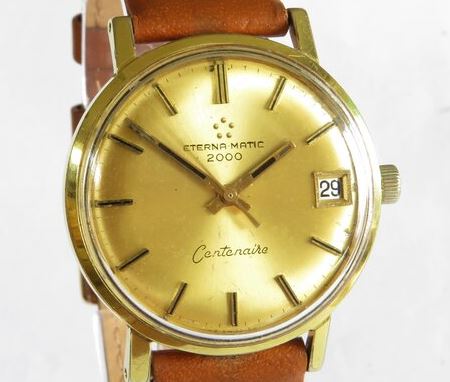
In 1856, Dr Josef Girard and Urs Schild founded “Dr Girard & Schild”, a movement factory in Grenchen, Switzerland. This later evolved into Eterna, a reputable manufacturer of ebauches. According to Mikrolisk, in 1923, Eterna registered the trademark ETA. This was later to become the dedicated movement-producing division called ETA SA. The name of the manufacturing arm is likely to come from the parent company name, ETernA. Over time, the ETA name became associated with the overall industrial organisation.
Formation of Ébauches SA
In the early twentieth century, Swiss watchmaking was facing significant economic pressure. Following the First World War and the emergence of wristwatches, competition amongst movement makers had become intense. In response, A. Schild (ASSA), FHF, and A. Michel SA joined together in 1926 to form a holding company called Ébauches SA. The purpose was to stabilise production and prevent destructive price competition. Through a series of mergers, companies such as Valjoux, Peseux, and Felsa SA became part of this network. As a result, Ébauches SA gradually developed into one of the most important movement producers in Switzerland. In 1932, Eterna’s movement branch (ETA SA) joined Ébauches SA.
ASUAG
When the Great Depression hit, the Swiss watchmaking industry was greatly in debt and overextended. Exports suffered and the entire industry was on its knees. As a result, SSIH was founded in 1930 through the merger of Omega and Tissot, consolidating the two companies that produced high-quality movements and a number of watch brands. The following year, ASUAG (“Allgemeine Schweizerische Uhrenindustrie AG”) was formed through Swiss banking and federal intervention to combat the economic crisis. The founding members included Ebauches SA and Société des Fabriques de Spiraux Réunies. Although they joined together under this umbrella, they remained relatively independent. The formation of ASUAG allowed the group to jointly set pricing and control exports. This reduced competition and increased the profitability of its members. It was, in effect, a state-sanctioned cartel.

Expansion
As the major manufacturer within the ASUAG group, ETA SA continued to expand. Over the following decades, Ébauches SA systematically bought a number of independent movement manufacturers, including famous suppliers like Valjoux, Peseux, Unitas, and Venus. The middle decades of the twentieth century saw Ébauches SA expand alongside the broader Swiss watch industry. ETA SA movements gained a reputation for reliability and standardisation. Many Swiss brands used ETA SA calibres because they were robust, serviceable, and relatively economical to produce.
The Quartz Crisis
A major turning point for the Swiss watchmaking industry occurred during the 1970s with the Quartz Crisis. The new technology, dominated by Japanese firms such as Seiko, introduced highly accurate and inexpensive quartz watches. This totally disrupted the traditional Swiss mechanical watchmaking industry. Numerous Swiss manufacturers collapsed under the financial pressure. Ébauches SA became part of the collective effort to rescue Swiss watchmaking from the crisis.
In 1983, the Swiss groups ASUAG and SSIH merged to form ASUAG-SSIH, which became SMH (Société Suisse de Microélectronique et d’Horlogerie) in 1985. This organisation officially became the Swatch Group in 1998. These initial Swiss brands included Certina, Longines, Mido, Omega, Rado, and Tissot. ETA SA was reorganised into a unified manufacturing company and became one of the industrial foundations of the new Swiss recovery strategy.
ETA and the Swatch revolution
The “Swatch” brand was launched in 1983 as a quartz watch to compete directly with affordable Asian imports. ETA SA proved especially important to the success of Swatch watches. The Swatch concept required highly automated manufacturing and simplified movement architecture. ETA SA designed movements that required fewer components and could be assembled efficiently on a large scale. The success of Swatch in the 1980s is largely considered as one of the events that saved the Swiss watch industry from collapse.
Noted mechanical movements
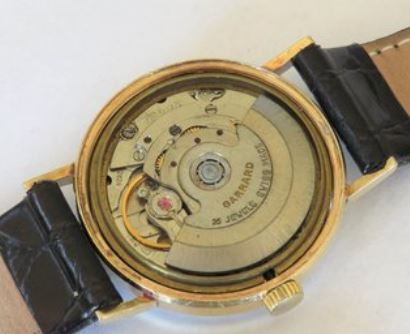
In the years that followed, ETA SA continued to refine mechanical movements and some of its calibres became industry standards. These include the ETA 2824-2 (1982) automatic movement, the ETA 2892-A2 (1983) chronometer grade automatic and the Valjoux 7750 (1973) chronograph. These movements appeared in watches from a wide range of brands, including high-end and entry-level timepieces. Overall, their reliability, availability of parts and ease of servicing made them popular amongst watchmakers and watch owners.
Changing the Swiss supply chain
During the 1990s and 2000s, ETA SA occupied a dominant position within Swiss watchmaking because it supplied movements to so many different brands. However, in 2002, the Swatch Group announced plans to reduce deliveries of ETA movements to competitors outside the group. The Swatch Group began to phase out external sales in 2006 following a legally enforced regulatory intervention. This decision forced many companies to develop in-house calibres or seek alternative suppliers such as Sellita.
ETA today
Today, ETA SA remains one of the largest movement manufacturers in the world. Headquartered in Grenchen, the company produces both mechanical and quartz movements. Even though luxury marketing increasingly focuses on “in-house” movements, ETA calibres continue to be respected for their precision, reliability, and long-term serviceability. Officially known as ETA SA Manufacture Horlogère Suisse, the company is more commonly referred to as ETA.
Related content
The Little Engine That Could at Worn & Wound.
Leave a Reply