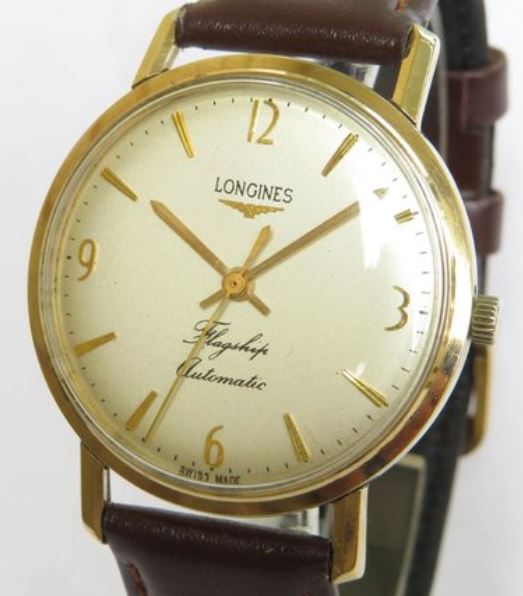
In this Set Back in Time post, we will attempt to explain how the automatic movement in a vintage watch works. Generally, vintage watches will contain mechanical movements, which are either manual or automatic. The manual movements are wound by hand daily. Each full wind will give upwards of 40 hours of power reserve. On the other hand, not literally (wearing two watches would look ridiculous), we have automatic watches. After an initial start by winding the crown a few times, an automatic watch will wind itself using the movement of your wrist to generate the energy needed to run the watch.
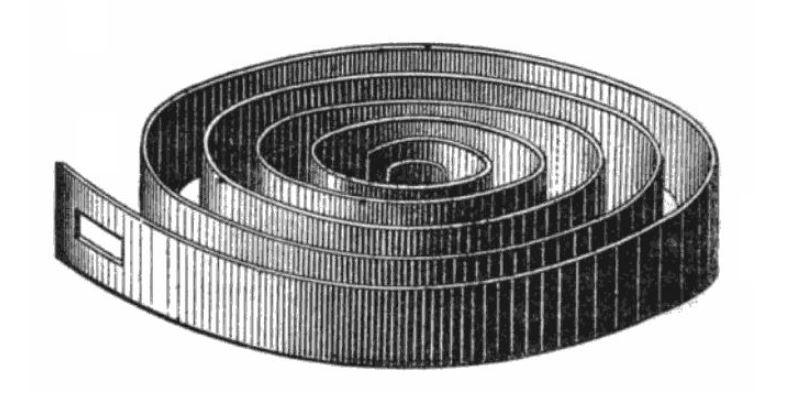
The mainspring
Regardless of the type of movement, manual or automatic, a mechanical watch stores its power in the mainspring. This is a tightly coiled strip of metal housed inside a barrel. As the spring unwinds, it releases energy through a series of gears that drive the hands. In a manually wound watch, the wearer must wind the crown regularly to keep the mainspring.
The role of the rotor
Automatic watches capture energy through a clever design. These movements, first invented and patented by John Harwood in 1924, marked a significant advancement in watchmaking. Inside the movement is a rotor, a semi-circular piece of metal that rotates freely. As your wrist moves, the rotor spins. Its motion winds the mainspring by turning a set of gears. Normal day-to-day activities will keep an automatic watch fully wound and running continuously. The rotor makes the watch self-sufficient and virtually eliminates the need for manual winding (John Harwood (watchmaker) at Wikipedia).
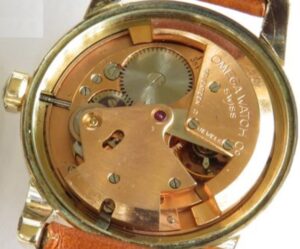
Early automatic watches featured a rotor that moved within a constrained space. These watches were sometimes called “bumper automatics” because of the sensation of the rotor bumping back and forth against springs. Modern designs let the rotor swing a full 360 degrees, which improves efficiency and reliability. Although automatic movements were commercially available in the late 1920s, it wasn’t until the 1950s that they captured the attention of the wider public.
Key components of an automatic watch
As mentioned above, the key difference between a manually wound mechanical watch and an automatic is the rotor and the self-winding mechanism. This tends to make automatic watches slightly thicker and heavier than manual watches. Below, we will briefly explain how the key components of a mechanical watch work together to keep time ticking over.
The mainspring: the source of power
At the heart of every mechanical watch is the mainspring, the source of power for the entire movement. The mainspring is a coiled strip of metal that, when wound, stores energy like a compressed spring. In an automatic watch, the rotor winds the mainspring as you move. The mainspring then unwinds slowly, releasing energy to power the movement. This process drives the gear train and keeps the watch ticking over. As a thin strip of metal, the mainspring is delicate, but strong and flexible. With regular servicing, they can last for decades without breaking or needing replacement.
The winding crown
The winding crown is the small knob on the side of a watch case, usually at the 3 o’clock position. It serves two main functions. You use the crown to set the time and date. In manual watches, the crown also winds the mainspring. In an automatic watch, the crown is used less often because the rotor continually winds the watch. However, the crown remains useful if the watch needs a boost after a period of inactivity.
The gear train: transmission of power
The gear train (wheel train) is a series of gears and pinions (smaller gears) inside the watch. It carries the energy from the mainspring to the hands via the balance and the escapement.
The balance wheel and escapement: regulating time
The power from the mainspring flows through the gear train towards the escape wheel. The pallet fork of the escapement holds this wheel in place, alternately locking and unlocking it. When the balance wheel oscillates (swings) back and forth, its impulse pin nudges the pallet fork. This temporarily releases the escape wheel tooth, giving the balance wheel a tiny, precise push of power to keep it swinging. The hairspring attached to the balance wheel acts like a shock absorber, pulling the wheel back to its centre point. This steady oscillation divides time into exact seconds and creates the ticking sound of the watch.

Jewels: reducing friction
Inside many mechanical watches, you will find tiny jewels. The number of jewels is often printed on the dial as a selling point. However, these are not decorative or valuable gems. Instead, they are small synthetic rubies, which are placed at high-friction points in the movement. These jewels, along with lubrication, reduce the friction between moving parts. By minimising wear and tear, they improve the longevity and accuracy of the watch.
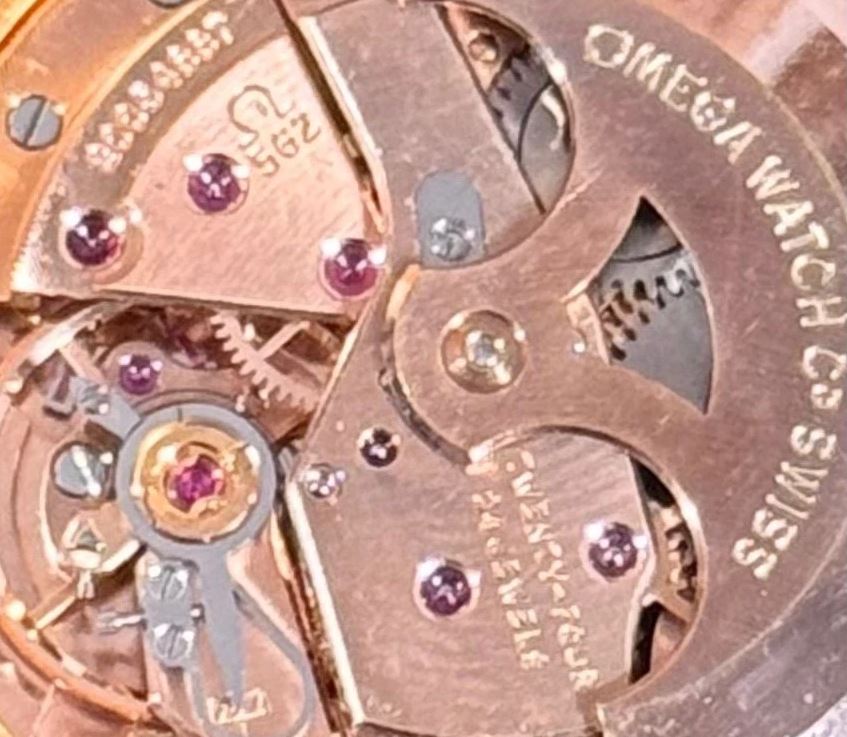
The use of jewels is generally a mark of quality in watchmaking. However, in vintage watches, anything beyond 17 to 25 jewels is generally surplus to requirements for a purely mechanical, time-only watch. While jewels reduce friction and wear, excessive numbers were often a marketing gimmick used by watchmakers. Manually wound watches with 17 jewels are generally considered fully jewelled. A well-made automatic watch will include 21-25 jewels to protect the rotor from excessive friction.
Maintaining your automatic watch
Ongoing care and maintenance for a vintage automatic watch helps preserve its condition and accuracy for years to come. Regular maintenance, careful handling, and proper storage all contribute to the longevity of the movement. There are several things to avoid, such as extreme temperatures, water (even if “waterproof”), strong magnetic fields (difficult in modern life), or sudden shocks. Keep the case and crystal clean by wiping them gently with a soft cloth. Avoid using abrasive cleaners or harsh chemicals, as these can damage the finish and seals. A watch is a machine and requires ongoing care, just like a vintage car. Regular servicing by a qualified watchmaker is an important part of ownership. Every 5 years is a good rule of thumb. During a service, the movement is dismantled, cleaned, inspected, lubricated, and adjusted as necessary (British Horological Institute – Accredited Repairers).
Summary
Vintage automatic and hand-wound watches are both traditional mechanical watches that rely on a complex mechanism to measure time. However, an automatic movement offers the convenience of a relatively “hands-free” daily experience. Once the time is set, and the mainspring is charged with a few turns of the crown, the watch will run indefinitely just through the movement of day-to-day life. At Set Back in Time, we definitely favour automatic watches, simply due to this convenience… or perhaps we are just inherently lazy.
Related content
Automatic watch at Wikipedia.
Leave a Reply