For many, a wristwatch is an essential daily accessory, something they cannot leave home without. Others see wristwatches as a stylish addition to an outfit, reserved for special occasions. For collectors, perhaps the most enduring appeal of owning a vintage watch is the knowledge that you own a particular piece of history. In an age of mass consumerism, there is something satisfying about owning an item that is truly unique. With the recent introduction of smartwatches, timepieces have also become multifunctional tools, tracking fitness, health, and notifications. Understanding the history of watchmaking provides insight into the evolution, craftsmanship, and intricate mechanics that make wristwatches such fascinating objects.

Measuring time through history
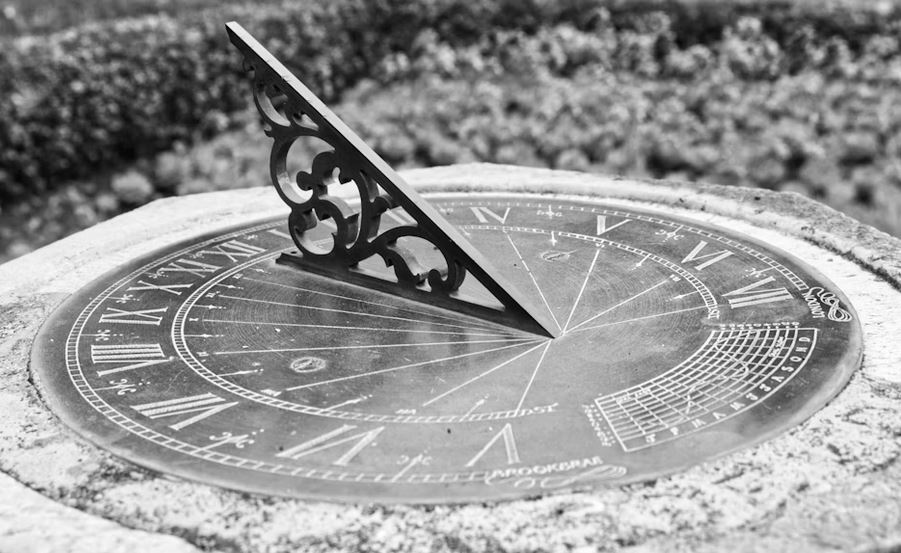
The concept of measuring time dates back to the earliest civilisations. Around 3,500 B.C., the Ancient Egyptians relied on the Sun to track time, using obelisks, now referred to as shadow clocks. Later, they developed sundials, with the earliest known example dating to 1,500 BC. While modern wristwatches are far more advanced, ancient Egyptian sundials influenced the circular design of contemporary timepieces. The familiar layout of clock faces today stems from these early attempts to segment time into measurable units.
One of history’s most intriguing timekeeping innovations emerged around 250 B.C. in Ancient Greece, a prototype of an alarm clock. Greek engineers developed a water clock, in which the gradual rise and flow of water tracked time. Eventually, the movement of water triggered a mechanical bird to whistle, acting as an alarm. Although water clocks were less accurate than sundials, they offered practical advantages. They worked indoors, at night, and in cloudy weather.
By the 8th century, the invention of the hourglass provided a more reliable method of measuring time. These were particularly useful in churches, where they helped regulate prayers and services. The first mechanical clocks are thought to have been tower clocks built in Europe from around 1270 to 1300 during the Renaissance period. These clocks did not yet have dials or hands, but told the time by striking bells. Over time, more sophisticated clock towers were created using dials and hands, making timekeeping more visible to the general population.
The pocket watch: the first portable timepiece
Timepieces became portable in the early 15th century following the invention of the mainspring, a wound metal ribbon that acts as a power source. This innovation led to the creation of the pocket watch, widely credited to Peter Henlein, a German watchmaker from Nuremberg, in 1504. Henlein’s watches were relatively inaccurate, but they marked the beginning of portable timekeeping.
The pocket watch was to dominate portable timepieces for the next four hundred years until the outbreak of the First World War. During that time, they evolved into highly accurate and reliable timekeepers and by the 19th century, a pocket watch was the mark of every gentleman.
Who created the first wristwatch?
The origin of the wristwatch remains a subject of debate among watchmakers. Guinness World Records credits Swiss watchmaker Patek Philippe with creating the first wristwatch in 1868 for Countess Koscowicz of Hungary. However, some historians believe that Abraham-Louis Breguet may have crafted an earlier wristwatch in 1812 for Queen Caroline Murat, sister of Napoleon Bonaparte.
When did wristwatches become popular?
Wristwatches did not gain widespread popularity until the 20th century. For years, pocket watches remained the preferred choice, particularly among men, due to their accuracy and elegant appeal. However, technological advancements in other fields led to a shift in timepiece design.
One of the most well-known stories of this transition involves Louis Cartier and his friend, Alberto Santos-Dumont, a pioneering aviator. Santos-Dumont needed a timepiece that allowed him to check the time while flying, something a pocket watch made impractical. Cartier designed the Cartier Santos in 1904, regarded as one of the first modern wristwatches. This model remains iconic and continues to be produced today.

Although wristwatches were not exclusively used for military purposes, they became essential for tactical operations. Unlike pocket watches, wristwatches allowed soldiers to synchronise attacks without requiring a signal, which could have alerted the enemy. The trench watches used in battle also needed to be far more durable to withstand harsh conditions. The outbreak of the First World War reinforced the practicality of wristwatches, as hands-free timekeeping became essential in combat. The war accelerated the shift towards rugged, functional wristwatches, many of which featured elements still found in modern designs, such as:
- Luminous dials for low-light readability
- Scratch-resistant glass
- Durable and water-resistant cases
By the end of the First World War, the public demand for wristwatches surged, firmly establishing them as an everyday accessory.
The Quartz Revolution
By the mid-20th century, watchmakers explored ways to develop electric-powered timepieces. The goal was to create a watch that did not require winding or movement to maintain accuracy. In 1959, Seiko began developing a quartz-powered watch. By 1964, they had a working prototype, which was used to time events at the Summer Olympics. In 1969, Seiko introduced the first commercially available quartz watch, which replaced the mechanical wheel with a digital counter.
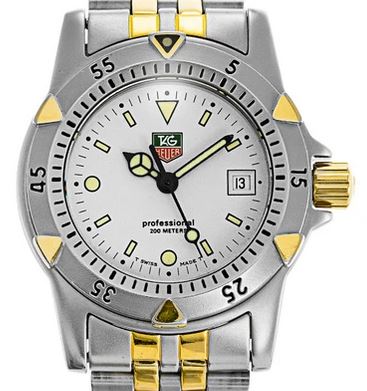
Quartz watches quickly became popular and accessible, as they were:
- Cheaper to manufacture
- More accurate than many mechanical watches
- Easier to maintain
This period, often referred to as the Quartz Crisis, saw many traditional Swiss watchmakers struggle as quartz technology disrupted the industry. Quartz watches are not held in as much esteem as mechanical watches by many collectors, including this one. Although I must admit I have owned one or two in the past.
The resurgence of mechanical wristwatches
Despite the popularity of quartz watches, mechanical timepieces experienced a revival in the 1980s. Luxury brands positioned them as high-end, aspirational products, emphasising their ingenuity and prestige. Swiss watchmakers, in particular, dominated the luxury segment, with “Swiss-Made” becoming a symbol of exceptional quality. The appeal of mechanical watches remains strong today, with vintage watch collectors appreciating their:
- Complex movements
- Handcrafted artistry
- Heritage and tradition
While quartz watches offer affordability and accuracy, mechanical watches have retained their status as timeless luxury pieces. Whether worn for function, fashion, or admiration of watchmaking, the wristwatch continues to evolve, reflecting both technological advancements and enduring craftsmanship.
Related content
Watch at Wikipedia.
Leave a Reply