If you’ve been browsing old watches, you’ve probably seen ones with glowing numbers and hands. Many of these used radium paint to make them visible in the dark. The glow was groundbreaking back in the day, but it also came with risks. Knowing what you’re dealing with is essential before you start collecting watches made between roughly 1910 and 1960.

We’re not doctors, so treat this as guidance, not medical advice. If you have health concerns, speak to a qualified professional before handling or buying one of these watches.
How radium entered watchmaking
In 1898, Marie and Pierre Curie discovered radium and realised it glowed naturally. A year later, it officially got its name, taken from the Latin for “ray”. Marie Curie later won a Nobel Prize for her work separating it from other materials. Once people saw its bright glow, they found all sorts of uses for it. At first, companies put radium in items you’d never expect today, everything from toothpaste to health tonics. People genuinely believed it had health benefits, so it appeared in countless consumer goods. The truth was, no one understood the long-term health effects. Without research or regulations, radium quickly spread into products used daily. This shows how exciting discoveries can cause problems when safety is overlooked.
Why is radium harmful?
Radium is an unstable element. It breaks down and releases radioactive particles, alpha, beta, and gamma. These particles can damage cells by knocking electrons off atoms. Over time, this can lead to serious illnesses, including cancer. Alpha particles are large and easily blocked by skin or paper. They’re only dangerous if swallowed, inhaled, or allowed into a wound. Beta particles can burn skin and are also risky if inhaled or swallowed. Gamma rays are much more penetrating, able to pass through your body and affect internal organs. When radium enters the body, it often targets bones, where it can stay for life. This can cause bone cancer, lung cancer, anaemia, and other health problems. Breathing in radium dust or swallowing it is far more dangerous than simply wearing a sealed watch.
The risk for vintage watch collectors
If a watch is intact, with its crystal firmly in place, the risk from external radiation is minimal. The problem comes when the luminous paint starts to degrade. Over time, radium paint becomes brittle and can flake into dust. If a crystal is cracked or missing, tiny radioactive particles can escape into the air. Breathing these in is the most serious danger for collectors. It’s the reason opening a radium dial watch without proper precautions is a bad idea. Radium also creates radon gas as it decays. Watch cases aren’t airtight, so this gas can leak out. Storing several radium watches together in a small, enclosed space can let radon build up to unsafe levels.
Why the glow fades, but the risk doesn’t
Radium paint isn’t just radium. It’s a mix of radium and a glowing compound called zinc sulphide. The radium’s alpha particles break down the zinc sulphide over time, so the glow disappears after a few years. However, radium’s half-life is about 1,600 years. That means the radioactive element remains active for many centuries. Even if the watch no longer glows, it’s still radioactive. A faded dial doesn’t mean a safe dial. It just means the phosphor is gone while the radium remains.
How radium got onto watch dials
In 1902, W. J. Hammer discovered that mixing radium with zinc sulphide created luminous paint. A few years later, it was patented and quickly adopted by watchmakers, particularly in Switzerland. During the First World War, luminous dials were especially valued. Soldiers could check the time at night without using lights that might give away their position. Unfortunately, the way the paint was applied caused serious harm to workers (How Watch Dials Are Illuminated? at Monochrome).
The “Radium Girls” were young women who painted the numbers and hands. They often licked their brushes to get a fine tip, swallowing small amounts of radium each time. This led to devastating illnesses, including a condition called “radium jaw”, where the jawbone deteriorated. By the 1930s, safer workplace practices had stopped the brush-licking method. Painters began using protective gear and better tools. Still, radium remained in watch production for decades afterwards (Radium Girls at Britannica).
The move to safer materials
Concerns about radiation eventually pushed watchmakers to change. Rolex stopped using radium in 1963, and the United States banned it from watches in 1968. Tritium, a much safer radioactive material, became the standard from the 1960s to the 1990s. It still glows in the dark but has a much shorter half-life of 12.3 years. Its beta radiation can’t pass through glass, making it far less risky. Tritium dials are often marked with “T Swiss T” or “Swiss T<25”, showing how much radiation they emit (Facts about tritium at the Canadian Nuclear Safety Commission).
From the mid-1990s, watchmakers switched to completely non-radioactive alternatives. LumiNova, introduced in 1993, became the go-to choice. It works by absorbing light and glowing afterwards, with no radiation involved. Variants like Super-LumiNova and Chromalight are now widely used and are completely safe.
What’s on your vintage watch dial
If you’re unsure whether a watch uses radium, tritium, or a modern compound, there are a few clues. Radium dials often have discoloured, crumbly paint and may not glow at all. Some have “Radium” or “Ra” printed on the dial, but not always. A Geiger counter is the most reliable way to check. Tritium dials usually show clear markings with the letter “T” on either side of “Swiss” or with “T<25”. Their glow fades over decades, so older tritium watches might look dim.
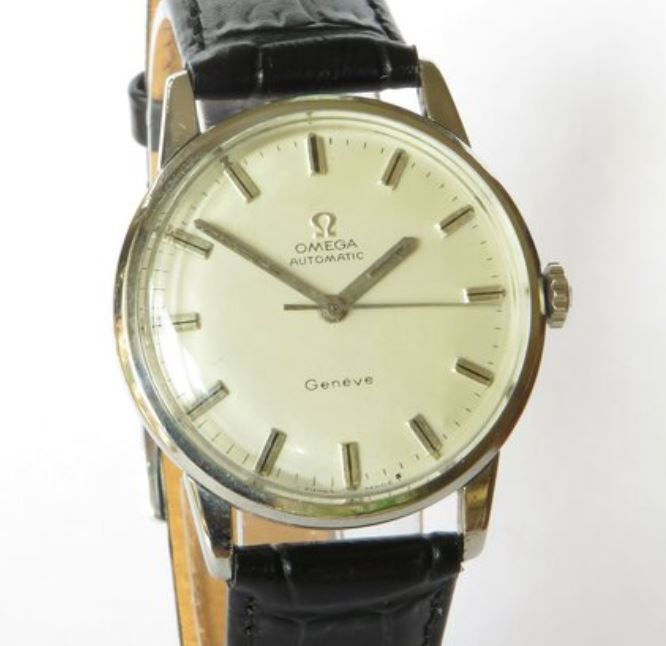
Modern luminous paints like LumiNova don’t carry any special markings. They glow strongly after brief exposure to light but fade if left in darkness. A simple test is to leave the watch in the dark for 24 hours. Tritium dials will still glow faintly, while LumiNova dials will only glow if “charged” by light.
Quick reference table
| Feature | Radium | Tritium | LumiNova / Super-LumiNova |
| Period Used | c.1910 – mid-1960s | 1960s – mid-1990s | mid-1990s – present |
| Glow Source | Radium + zinc sulphide | Tritium gas + phosphor | Photoluminescent pigment |
| Radiation Type | Alpha, beta, gamma | Low-energy beta | None |
| Half-Life | ~1,600 years | 12.3 years | Not applicable |
| Markings on Dial | Sometimes “Radium” / “Ra” | “T Swiss T” / “Swiss T<25” | None |
| Glow Duration | Permanent (fades due to phosphor decay) | Decades, then fades | Needs light to charge, lasts hours |
| Safety Risk | High if dust/gas inhaled or ingested | Low | None |
| Best Detection Method | Geiger counter | Dial markings / Geiger counter | Visual behaviour after light exposure |
Storing and wearing radium watches safely
If you decide to collect radium dial watches, handling and storage are key to keeping risks low. Avoid opening the watch unless absolutely necessary. If work needs to be done, take it to a watchmaker who understands how to handle radioactive dials. Store your watches somewhere with good airflow so any radon gas doesn’t build up. Don’t keep too many in one small, sealed container, and avoid storing them near your bed or desk. If you wear a radium watch, make sure the crystal is intact. Don’t wear it while sleeping, and try to limit prolonged skin contact.
Making a personal choice
Some collectors are comfortable wearing radium watches daily. Others prefer to keep them purely as display items. Both approaches can be safe if you follow the right precautions. If the risks bother you, there’s no shortage of tritium or modern luminous watches to choose from. They give you the same glowing effect without the radiation worries. In the end, collecting watches, whether radium, tritium, or modern, should be enjoyable. Understanding the risks means you can appreciate your vintage watch without compromising your health.
Related content
Radium at Wikipedia.
Leave a Reply