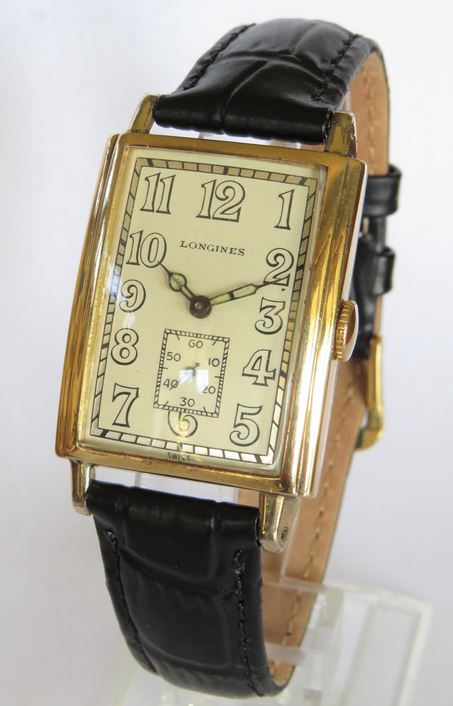
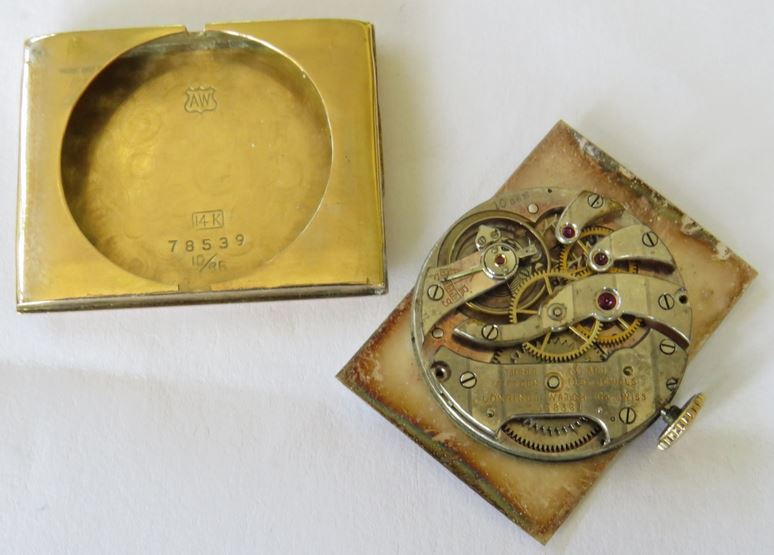
In this Set Back in Time post, we take a look at a timepiece from one of our favourite vintage brands, Longines. It’s a handsome Art Deco-style wristwatch cased in 14ct gold. The watch has a good-quality calibre 10.86N 15-jewel movement with three adjustments. The movement is working well. The movement is fully signed, and the Longines serial number dates the watch to 1929.
A brief history of Longines
Auguste Agassiz founded the firm in 1832 alongside partners Henri Raiguel and Florian Morel. Originally trading as Raiguel Jeune & Cie, Agassiz took control in 1846 before bringing his nephew, Ernest Francillon, into the fold. In 1867, the company opened a factory in the “Les Longines” (long meadows) area of Saint-Imier. This location ultimately provided the brand with its permanent name.
This move marked a pivotal shift from assembling external components to in-house manufacturing, beginning with the calibre 20A. In 1889, Francillon registered the iconic winged hourglass logo. The World Intellectual Property Organization (WIPO) now recognises this as the world’s oldest unchanged trademark still in active use (Longines at Chronopedia).
Throughout the 20th century, Longines pioneered the field of sports timing, famously serving as the official timekeeper for the Olympic Games. By combining technical innovation with a signature “quiet elegance”, the brand has secured an enduring legacy. Today, Longines remains a cornerstone of luxury Swiss watchmaking.
Longines calibre 10.86N
The Longines calibre 10.86N is a manual-winding mechanical watch movement featuring a bimetallic screw balance, a Breguet hairspring, and a modified setting lever and yoke. The movement functions include stem winding and setting, as well as a sub-second display. According to the Ranfft DB, the calibre 10.86N has 15 jewels, a 30-hour power reserve and a frequency of 18,000 vph. Longines introduced the calibre 10.86N in 1922.
Case and dial
This rectangular-cased timepiece offers a comfortable and stylish presence. It measures 25mm in width (excluding the winding crown) and 30mm in height (excluding the lugs). The main body consists of 14-carat gold. The “14K” hallmark suggests the manufacturer originally produced this case for the American market, where the “K” stamp was standard practice. The “AW” stamp is likely to be that of Albert Wittnauer. He was the sole authorised importer of Longines watches into the US from 1880 (“Carat” versus “Karat” at Fratello).
While the watch originally featured delicate wire lugs, a previous owner commissioned a professional upgrade to more substantial, gold-plated lugs. This modification provides a much more robust attachment for the strap than the original wire design. Although close inspection reveals a small amount of wear to the plating on these lugs, they remain in good, functional condition. A well-preserved curved lens protects the signed dial, which remains in very good condition and displays its original character beautifully. To finish the piece, the watch now features a new black leather strap with a matching gold-plated buckle.
Summary
The Set Back in Time group found this watch to be visually appealing. However, as a collector’s piece, it lacked some originality due to the modified lugs. Although they are most certainly more robust and practical than the original wire lugs, they detract from the overall authenticity.
Related content
Longines at Grail Watch Wiki.
Leave a Reply