“What is power reserve?” is one of the most common questions asked about mechanical watches. It refers to the amount of time a mechanical watch will continue to run once it has been fully wound. This is the stored energy available in the mainspring, which powers the watch until it runs out. In Swiss watchmaking, this concept is called réserve de marche. Modern mechanical watches often offer more than 42 hours of reserve, with some exceeding 70 hours. Vintage watches, however, usually provide between 36 and 48 hours. That means they may keep time for up to two days without further winding (Power reserve at Longines).
How power reserve works
Mechanical watches store energy in a tightly coiled mainspring housed in a barrel. When you wind the crown, the spring coils tightly. As the spring unwinds, it releases energy in a controlled manner to power the movement. This energy drives the hands, calendar, and any other complications. When the spring fully unwinds, the watch stops running. To keep the watch working, you must wind it again or wear it if it is automatic. The mainspring’s length and the movement’s frequency determine how long the reserve lasts. Lower beat rates consume less energy and may offer longer reserves (What is a watch’s power reserve? at Chrono24).
Manual versus Automatic watches
Manual-wind watches need regular winding, usually once per day. These typically offer 36 to 42 hours of power reserve. Some rare vintage pieces, such as the Omega T17, offer up to 60 hours. Automatic watches contain a rotor that moves with the motion of your wrist. This movement rewinds the mainspring while you wear the watch. If worn daily, an automatic watch remains powered and keeps time reliably. If removed for more than a day, it may stop and require resetting.

A watch removed on Friday evening might still run on Monday morning. However, this depends on the length of the power reserve. People with a sedentary lifestyle may need to wind their automatic watches more frequently (Manual versus Automatic at Bob’s Watches).
How to wind a watch
To wind a mechanical watch, turn the crown clockwise until you feel firm resistance. If the crown is screw-down, you must unscrew it first. Some watches allow winding in both directions, though most use a single direction. Manual watches can be damaged if the winding is forced, so stop when you feel resistance. This is often incorrectly referred to as “overwinding”. Automatic watches contain a slipping clutch that prevents the mainspring from overtightening. This mechanism allows the spring to slide inside the barrel once fully wound (Slipping clutch at Wikipedia). Even if the watch is automatic, manual winding ensures a full charge, especially when daily activity is low.
Power reserve indicators
Some mechanical watches include a power reserve indicator. This feature shows how much energy remains before the watch needs winding. It tracks the uncoiling of the mainspring in real time. According to Watch Wiki, the first production watch with a power reserve indicator was the Jaeger-LeCoultre Powermatic from 1948. It used the calibre JLC 481.
These power reserve indicators appear in various forms. Some use an arrow pointing to a numbered arc. Others have a straight-line gauge or an “up/down” scale. Certain models display a colour change, such as blue for full and red when nearly empty. Some even use plus and minus signs.
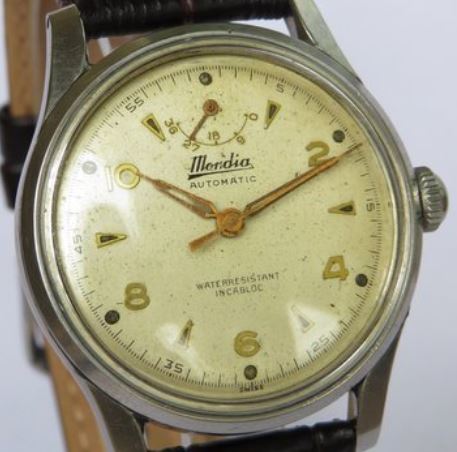
Collectors generally appreciate power reserve indicators for their functional value. They offer a useful reminder to wind the watch regularly and, if nothing else, offer a talking point in watch discussions. However, most vintage models do not include this feature. Understanding your watch’s power reserve helps keep it running smoothly. Whether you wind it by hand or rely on your own movement to wind the watch, regular care ensures long-lasting performance.
Related content
Automatic winding at Watch Wiki.
Leave a Reply