Vintage Smiths watches hold a distinctive position in Britain’s watchmaking history. They combine British-made mechanical movements, military history and understated styling while remaining more accessible than many comparable Swiss brands. Although prices have increased over recent years, Smiths still allows collectors to acquire an important part of British manufacturing history without paying the premium associated with many other vintage watches. In this Set Back in Time guide, we will explain what a collector should be looking for when considering a Smiths for their collection.
A brief history of Smiths watches
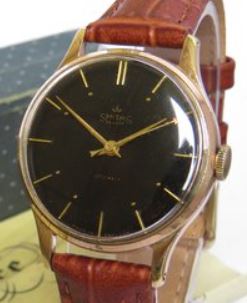
In 1851, Samuel Smith (1826-1875) founded a watch and clock business in London. During its early years, Smiths operated mainly as a retailer, offering high-quality watches produced by specialist makers, such as Nicole Nielsen, under its own name. As demand grew, the business expanded into precision instruments for the rapidly developing motor and aviation industries, becoming one of Britain’s leading engineering companies. During the Second World War, government contracts enabled Smiths to establish a manufacturing facility in Cheltenham, where it gained the capability to produce complete watch movements domestically. After the war, the company introduced a successful range of civilian wristwatches, marking the final period of large-scale English mechanical watch production before manufacturing ended in 1971 (Smiths watches at Chronopedia).
The different types of vintage Smiths watches
Collectors generally split vintage Smiths watches into three main groups. The most sought-after examples were produced at the Cheltenham factory and can usually be recognised by the “Made in England” wording on the dial. These watches feature the company’s finest in-house movements, superior cases and higher-quality finishing. A second category consists of watches manufactured in Wales by the Anglo-Celtic Watch Company, often marked “Made in Great Britain”. These were designed as practical, affordable watches and commonly featured simpler pin-pallet movements. The final group includes watches fitted with Swiss or Japanese movements during the company’s later years. While these remain part of the Smiths story, English-made models continue to attract the strongest demand among collectors.
The Smiths De Luxe and the Everest connection
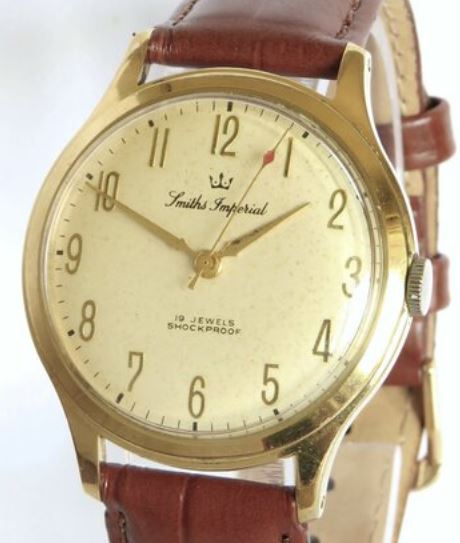
The De Luxe range remains one of the most desirable Smiths collections. Its reputation is closely linked to the 1953 Everest expedition, which Smiths supported alongside Rolex. Sir Edmund Hillary wore a Smiths De Luxe during the successful climb. Early examples from this period, particularly those with original dials and Dennison Aquatite cases, are of considerable interest. Collectors also value the rare Antarctic-style versions. However, later De Luxe models provide an affordable entry point for anyone seeking an authentic English-made vintage watch.

Other notable Smiths collections
Other collections appeal to different preferences. The Astral combines balanced proportions with restrained styling, making it a popular vintage dress watch. Date versions are uncommon, although their non-quickset date mechanism is less practical for regular use. The Everest collection developed through several generations and includes some of Smiths’ finest hand-wound movements, particularly the calibre 0104 with 19 jewels and KIF shock protection. The Imperial shares much of the same engineering, while automatic Imperial models rank among the rarest civilian Smiths watches. Military enthusiasts often favour the W10, which was issued to the British Army and is respected for its robust construction, military background and comparatively limited production.
What to look for when buying a vintage Smiths watch
Condition has a major influence on desirability and value. Originality should always take priority over a pristine appearance. Many vintage Smiths watches display an attractive patina that reflects decades of careful use, and collectors generally welcome this natural ageing. By comparison, poorly restored dials can reduce both value and appeal. Examine the dial carefully to ensure the printing remains sharp, the fonts are correct and the spacing is consistent. The hands should be appropriate for the model and production period, while replacement crowns, although sometimes unavoidable, should be identified by the seller. Original presentation boxes, guarantee documents and service records further enhance desirability, particularly for more valuable references.
Assessing the movement
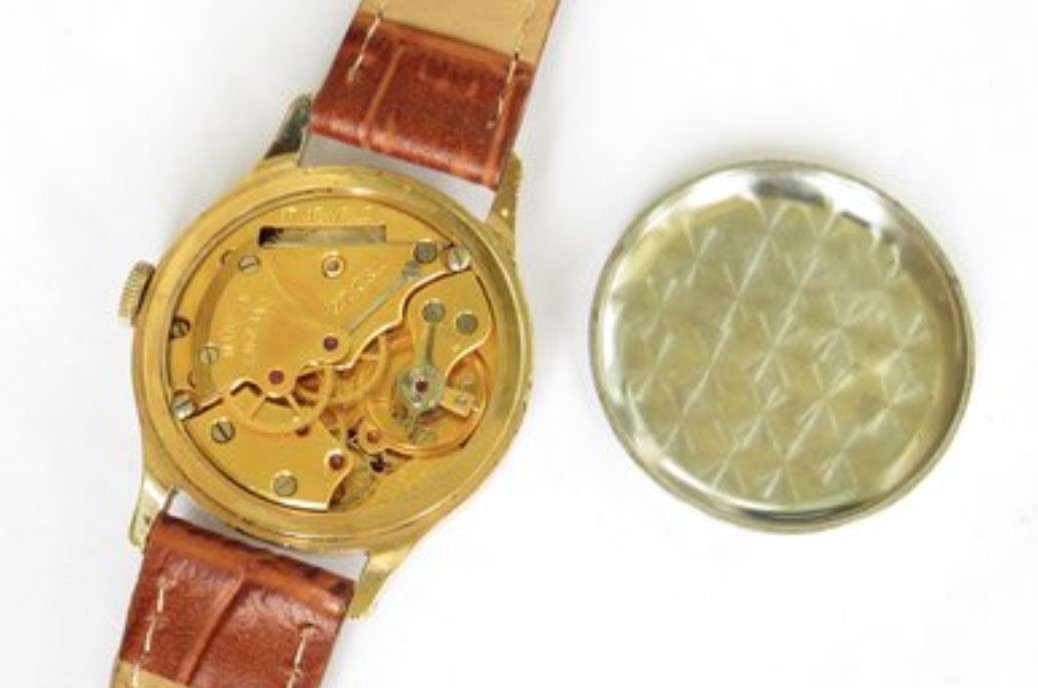
The movement also deserves careful examination. Many English-made Smiths calibres remain serviceable because specialist watchmakers can still obtain replacement parts. Look closely for corrosion, rust or pitting, as these usually indicate previous moisture damage. A watch that has recently been serviced by an experienced independent watchmaker will often justify a higher asking price and may represent better long-term value than a cheaper example requiring extensive repairs. Smooth winding, consistent timekeeping and a clean movement all suggest careful ownership throughout its life. Notable Smiths movements include the manual wind calibres 0104, 1215 (sub-seconds), 27CS and the automatic calibre 104G.
The case
The case should receive the same level of attention. During the post-war years, Smiths frequently used chrome-plated or gold-plated cases instead of solid precious metals. Significant wear to the plating, particularly around the bezel and lugs, can noticeably affect both appearance and value. Stainless steel and solid gold cases generally survive in better condition and usually attract stronger prices. Original Dennison Aquatite screw-back cases, especially those found on watches from the Everest era, are especially desirable because they contribute to the watch’s historical integrity. Despite any original claims of water resistance, no vintage Smiths should be exposed to water without proper testing and suitable servicing.
Mistakes to avoid
New collectors should avoid several common mistakes. One of the most frequent is confusing the “affordable” Welsh-made Empire models with the more desirable Cheltenham-made watches. Although both display the Smiths name, they occupy very different positions in the collector market. “Made in England” on the dial is very much the key. Buyers should also be cautious of watches assembled from mismatched components, replacement dials or incorrect cases. Provenance is particularly important for Everest-related models. Any claims linking an ordinary watch to a famous expedition should be supported with convincing evidence. Exceptionally low prices often indicate underlying issues rather than outstanding value, so buying from a knowledgeable specialist or a seller who provides detailed photographs and an honest description is usually the wiser option.
Summary
The demand for vintage Smiths watches has grown as more collectors recognise Britain’s contribution to twentieth-century watchmaking. Their blend of historical importance and relatively affordable prices makes them an appealing area of vintage collecting. Making sure that you buy an original piece with the all-important “Made in England” on the dial is the key when adding a vintage Smiths to your collection.
Related content
Smiths Group at Wikipedia.
Leave a Reply